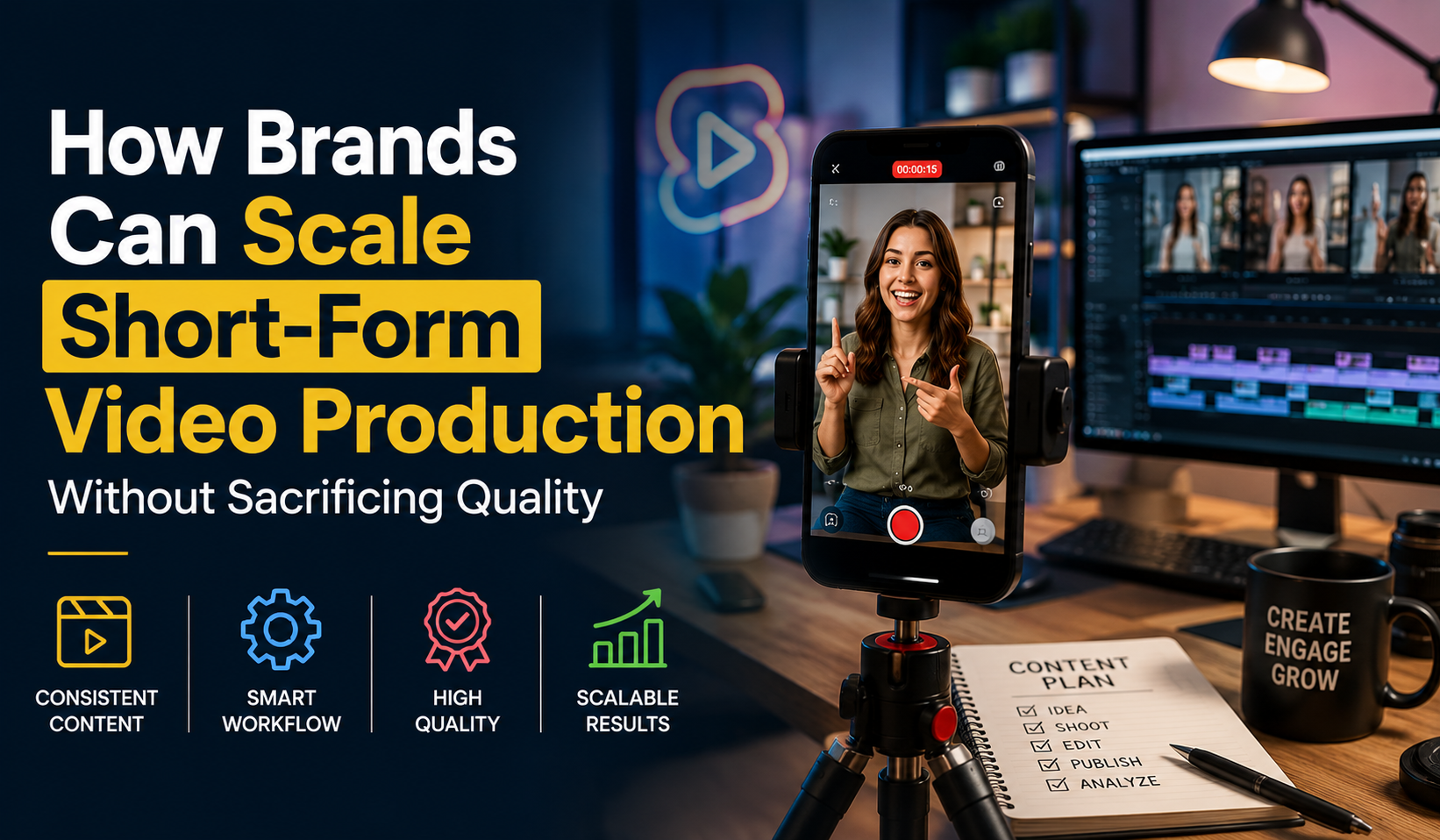
How Brands Can Scale Short-Form Video Production Without Sacrificing Quality
Short-form video production allows brands to consistently create engaging content for platforms like TikTok, Instagram Reels, YouTube Shorts, LinkedIn, and Facebook. Scaling this content successfully requires more than publishing frequently; it requires a repeatable editing workflow, brand consistency, platform optimization, and efficient production systems. Many growing brands achieve this by combining strategic content planning with professional video editing support that maintains quality while increasing output.
Introduction
Short-form video has become one of the most effective ways for brands to reach modern audiences.
Whether the goal is increasing brand awareness, driving ecommerce sales, generating leads, or building customer trust, platforms such as TikTok, Instagram Reels, and YouTube Shorts have changed how businesses communicate online.
However, producing one or two successful videos is very different from publishing high-quality content consistently.
Many marketing teams quickly discover that recording footage is only a small part of the production process. Reviewing clips, trimming scenes, adding captions, creating motion graphics, balancing audio, exporting multiple formats, and preparing platform-specific versions consume significant time.
As content demand increases, maintaining quality becomes even more difficult.
This is why successful brands focus on building scalable production systems instead of relying on last-minute editing or inconsistent creative processes.
Why Short-Form Video Dominates Digital Marketing
Consumer attention spans continue to shift toward fast, engaging content.
Short-form videos help businesses:
- Introduce products quickly
- Demonstrate product features
- Build trust through customer stories
- Educate audiences
- Support paid advertising campaigns
- Increase social engagement
- Repurpose long-form content
- Improve brand visibility
Instead of creating separate campaigns for every platform, brands can maximize existing content by adapting videos into multiple short-form assets.
Scaling Is About Systems, Not Volume
Many businesses assume scaling means simply producing more videos.
In reality, sustainable growth comes from improving the production workflow.
A structured system includes:
- Content planning
- Recording standards
- Organized file management
- Brand templates
- Caption styles
- Motion graphics libraries
- Review workflows
- Platform-specific exports
- Publishing schedules
When these processes are standardized, production becomes faster without reducing quality.
Brand Consistency Matters
Every video represents the brand.
Inconsistent fonts, colors, transitions, music, or editing styles can make even professional content appear disconnected.
Strong brands maintain consistency across every platform by using:
- Standard typography
- Brand color palettes
- Intro and outro templates
- Logo placement
- Caption formatting
- Motion graphic styles
- Audio standards
- Thumbnail consistency
A repeatable editing process ensures audiences immediately recognize the brand regardless of where they watch the content.
Repurpose Instead of Creating Everything From Scratch
One long-form recording can generate dozens of smaller content pieces.
For example, a single webinar can become:
- YouTube Shorts
- Instagram Reels
- TikTok clips
- LinkedIn videos
- Facebook videos
- Customer education content
- Email marketing assets
- Product highlights
This approach increases return on every recording session while reducing production costs.
The Role of Professional Video Editing
Recording quality footage is only the beginning.
Professional editing transforms raw recordings into polished marketing assets by improving pacing, storytelling, visual engagement, audio quality, captions, branding, and platform optimization.
Rather than asking marketing teams to manage complex post-production tasks, many brands work with professional video editing services that can consistently deliver platform-ready content while internal teams focus on marketing strategy and business growth.
Conclusion
Scaling short-form video production isn’t about producing endless content—it is about creating a reliable production system that balances efficiency with quality.
Brands that invest in structured workflows, consistent creative standards, and experienced editing support are better positioned to publish more content, maintain stronger brand recognition, and respond quickly to changing market demands.
As video continues to dominate digital marketing across the USA and Europe, businesses that combine strategic planning with professional production processes will have a significant competitive advantage.